
Crowns, Bridges & Dentures
Are you looking to restore your smile permanently? Whether you have a single missing tooth, multiple gaps, or a more complex oral health situation, dental crowns, bridges, and dentures offer proven solutions — and knowing the difference helps you choose the right one.
At Dr. Nagar's Teeth & Braces Dental Clinic, Aliganj, Lucknow, we provide the highest-quality restorations — from advanced zirconia crowns fabricated with CAD/CAM technology to comfortable, aesthetic flexible dentures — all customised to your unique smile with meticulous precision.
Shade-matched to your natural teeth
CAD/CAM zirconia technology
Premium ceramic & metal options
Flexible & implant dentures
38+ years of restorative expertise
Precision-fit for comfort & function
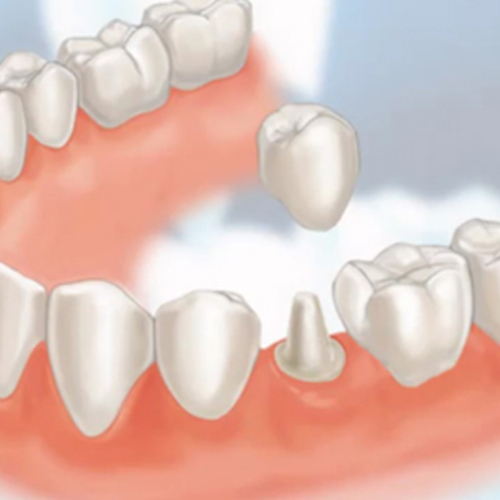
Dental crowns (commonly known as caps) are custom dental prosthetics used to cover a damaged, decayed, or root-canal-treated tooth. Fabricated from impressions of your teeth, each crown is precision-crafted to restore the tooth's original shape, size, and function — while looking completely natural.
The most aesthetic option — used primarily for front teeth. The dentist blends the crown seamlessly with the natural colour of your surrounding teeth for an invisible restoration.
Best for: Front teeth, high-visibility areas
An inner metal core covered by a ceramic layer — combining the strength of metal with the aesthetics of porcelain. A long-established, highly reliable option for most teeth.
Best for: Back teeth, all-round use
The most advanced crown option, fabricated using CAD/CAM digital technology. Exceptional in both strength and aesthetics — stronger than PFM and more natural-looking than metal.
Best for: Front & back teeth, long-term durability
Offer superior corrosion resistance and require minimal tooth reduction before placement. Extremely durable and rarely chip or break — ideal for out-of-sight back teeth.
Best for: Back molars, high bite force areas
Gold alloy crowns combine copper, gold, and other metals for exceptional wear resistance. They are gentle on opposing teeth and have a proven track record of decades of use.
Best for: Patients seeking maximum longevity
Prefabricated crowns primarily used as temporary solutions in adults or to protect decayed primary (milk) teeth in children. Quick, cost-effective, and reliable for temporary protection.
Best for: Children's teeth, temporary restorations
Location in the mouth
Front vs. back teeth have different aesthetic and strength requirements.
Tooth visibility
How much of the tooth is seen when you speak or smile.
Remaining tooth structure
The amount of healthy tooth structure left and the extent of damage.
Opposing tooth type
Whether the opposing tooth is natural or already an artificial restoration.
Gum position & shade
The position of the gumline and the colour of surrounding natural teeth.
Budget & preference
Your aesthetic goals, longevity expectations, and budget.
How Crown Placement Works
X-rays and clinical assessment determine whether a crown is needed and which type best suits your tooth and overall dental health.
The tooth is shaped to accommodate the crown. A small amount of enamel is removed from all sides to create space for the cap.
A precise digital scan or physical impression is taken. This is sent to the dental lab (or CAD/CAM machine) to fabricate your custom crown.
The finished crown is checked for fit, colour, and bite — then permanently bonded onto your prepared tooth with dental cement.
When one or more adjacent teeth are missing, crowns can be used to replace them by taking support from the neighbouring natural teeth. These joined crowns, which span across the gap, are called a dental bridge.
The teeth on either side of the gap (called abutment teeth) are prepared and fitted with crowns, while one or more artificial teeth (pontics) fill the space in between — forming a bridge that is permanently cemented in place.
Most common — a false tooth held by crowns on both adjacent teeth. Requires healthy natural teeth on both sides of the gap.
Supported by a crown on only one adjacent tooth. Used when natural teeth exist on only one side of the gap.
A conservative option using a metal or porcelain wing bonded to adjacent teeth — minimal tooth reduction required.
For larger gaps — anchored by dental implants rather than natural teeth. No need to prepare adjacent healthy teeth.
Also referred to as false teeth, dentures are removable prosthetic dental devices designed to replace a few or an entire set of missing teeth. Modern dentures closely mimic the colour and appearance of natural teeth and gums — and are far more comfortable and aesthetic than older generations of dentures.
Custom-made and placed after all teeth have been removed and the gums have fully healed. Complete dentures mimic the colour and appearance of natural teeth and gums. These are provided once the tissues have stabilised post-extraction.
Available in upper, lower, or both arches.
Created before the remaining teeth are removed and fitted into the mouth immediately after extraction. This ensures you never go without teeth while healing. They typically require relining within a few months as the gums reshape.
Ideal for patients who cannot go without teeth.
Used when several teeth are missing but some natural teeth remain. A removable alternative to dental bridges — attached to a metal or acrylic framework that clips onto the remaining natural teeth for support and stability.
Prevents remaining teeth from shifting out of position.
The most advanced removable denture option — featuring a flexible base with no rigid metal wires or clasps. They adapt to the contours of your mouth, cause minimal tissue irritation, are virtually unbreakable, and offer superior aesthetics. Can be full or partial.
Ideal for patients who value comfort and aesthetics.
Conventional dentures can slip or move during eating and speaking. Implant-supported (overdentures) are anchored to 2–4 dental implants for dramatically superior stability, function, and comfort. The best of both worlds — removable convenience with implant-level retention.
Snap on/off the implants for easy cleaning.
Short-term dentures used while permanent prosthetics are being fabricated, or during a healing period after implant surgery. They maintain aesthetics and basic function temporarily and are replaced once definitive treatment is complete.
Ensures you're never without a smile during treatment.
Proper maintenance extends the life of your restoration and keeps your mouth healthy.
Brush crowns twice daily with a soft brush and non-abrasive toothpaste. Pay attention to the gumline around the crown where plaque builds up.
Use a floss threader or interdental brush to clean around your crown and under bridge pontics daily to prevent decay and gum disease.
Remove and rinse dentures after eating to clear food debris. Handle over a folded towel to avoid breakage if dropped.
Store dentures in a mild denture soaking solution overnight. Never use hot water — it can warp the shape. Never leave them to dry out.
Don't bite down on ice, boiled sweets, or extremely sticky foods with crowned teeth. These can crack or dislodge restorations.
Visit Dr. Nagar every 6 months. Crowns are inspected for wear, and dentures checked for fit as gums and bone naturally change over time.
Crowns vs. Bridges vs. Dentures
| Consideration | 👑 Crown | 🔗 Bridge | 😁 Dentures |
|---|---|---|---|
| Purpose | Cap damaged tooth | Replace 1–4 missing teeth | Replace many/all teeth |
| Fixed or Removable | Fixed (permanent) | Fixed (permanent) | Removable |
| Surgery Required | ✅ No | ✅ No | ✅ No (standard) |
| Adjacent Teeth | ✅ Not affected | ⚠️ Must be shaped | ✅ Not affected |
| Bone Preservation | ⚠️ Partial (via tooth) | ❌ No bone stimulation | ❌ Bone loss continues |
| Aesthetics | ✅ Excellent | ✅ Excellent | ✅ Good (flexible best) |
| Lifespan | 10–15 years (zirconia: longer) | 10–15 years | 5–10 years |
| Maintenance | Normal brushing & flossing | Floss under pontic daily | Remove & clean daily |
| Cost Level | Moderate to high | Moderate to high | Lower to moderate |
Not sure which is best for you? Book a consultation — Dr. Nagar will assess your situation and recommend the most suitable option.
Frequently Asked Questions
A filling repairs a small to moderate portion of a damaged tooth, leaving the natural tooth largely intact. A crown covers the entire visible portion of the tooth above the gumline — used when decay or damage is too extensive for a filling to adequately restore the tooth's strength and structure. Crowns also protect the tooth from further fracture.
With proper care, dental crowns typically last 10–15 years. Zirconia and metal crowns may last significantly longer — sometimes 20+ years. Porcelain crowns are slightly more susceptible to chipping over time. Regular dental check-ups allow early detection of crown wear or loosening before issues develop.
The crown placement procedure is performed under local anaesthesia, so you won't feel pain during treatment. Your tooth may feel sensitive to temperature for a few days after the crown is fitted, as the pulp settles. Over-the-counter pain relief is usually sufficient. If discomfort persists beyond a week, contact us.
In most cases, yes. A root canal-treated tooth becomes brittle over time because the nerve supply is removed. A crown protects the tooth from cracking under normal biting forces, especially for back teeth (premolars and molars) that absorb significant chewing pressure. Front teeth may sometimes be restored with a post and core plus crown.
Most new denture wearers experience an adjustment period of 2–4 weeks. During this time, mild soreness, increased saliva, and slight speech difficulties are normal. Your mouth muscles and tongue adapt to the new appliance. Flexible and implant-supported dentures typically have a shorter adjustment period due to their superior fit and comfort.
Most dentists recommend removing dentures for at least 6–8 hours per day — usually overnight. This gives the gum tissue a chance to rest and recover. Wearing dentures continuously can accelerate bone loss and cause tissue irritation. Soaking dentures overnight also keeps them moist and maintains their shape.
Flexible dentures are made from a thermoplastic nylon resin — no rigid metal framework, no visible wires or clasps. They are more comfortable, more aesthetic, and virtually unbreakable compared to conventional acrylic dentures. They adapt better to the natural contours of your mouth and cause less tissue irritation. Many patients find them significantly more comfortable.
The right option depends on how many teeth are missing or damaged, the condition of your remaining teeth, your bone structure, and your budget. Dr. Nagar will examine your mouth thoroughly, take X-rays, and discuss all suitable options — recommending the most conservative, effective, and long-lasting solution for your specific situation.
Our Other Services
Orthodontics & Braces
Metal, ceramic, Damon & lingual braces.
Invisalign & Aligners
Invisible teeth straightening — removable.
Cosmetic Dentistry
Veneers, whitening, smile design & bonding.
Dental Implants
Permanent tooth replacement anchored in bone.
Pediatric Dentistry
Gentle, child-friendly care from infancy.
Gum Disease Treatment
Scaling, deep cleaning & periodontal therapy.
Book a consultation with Dr. Amit Nagar in Lucknow today.